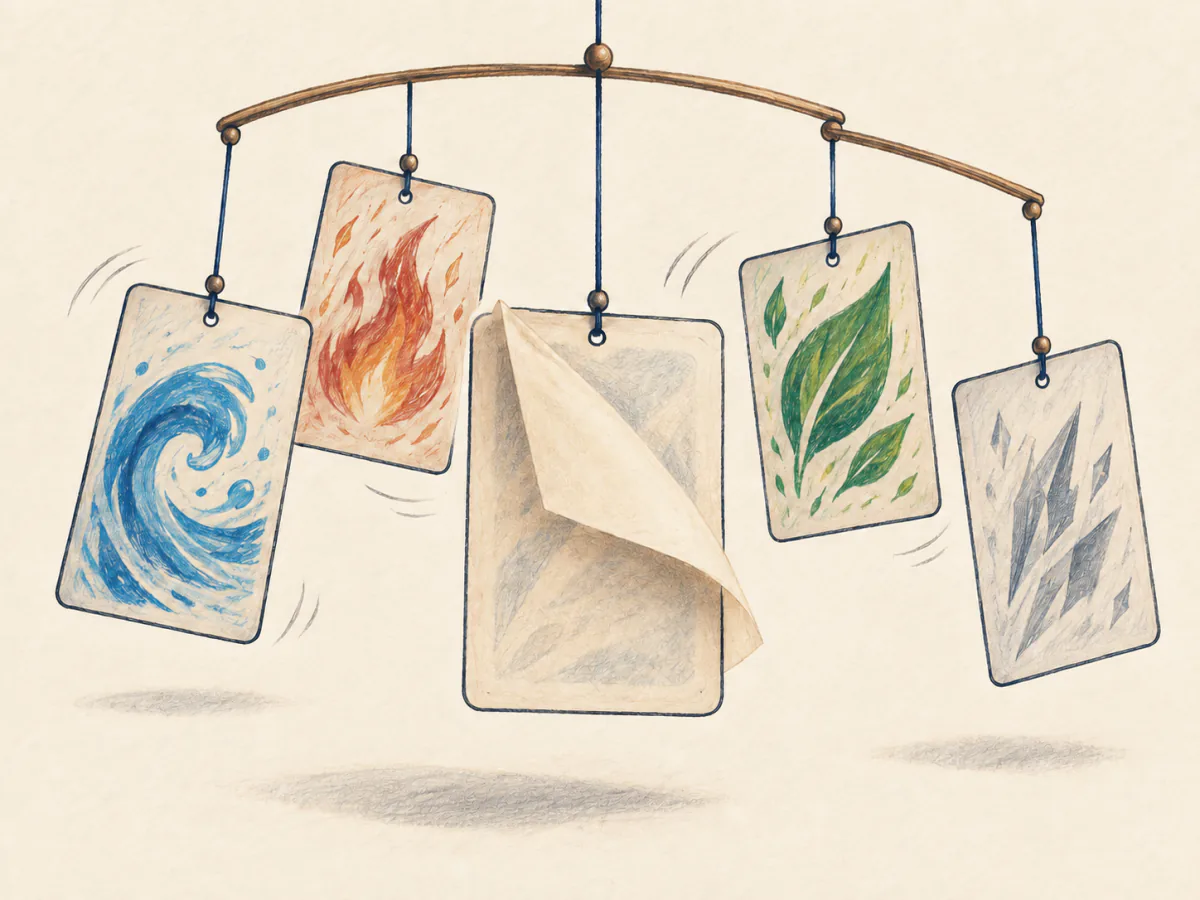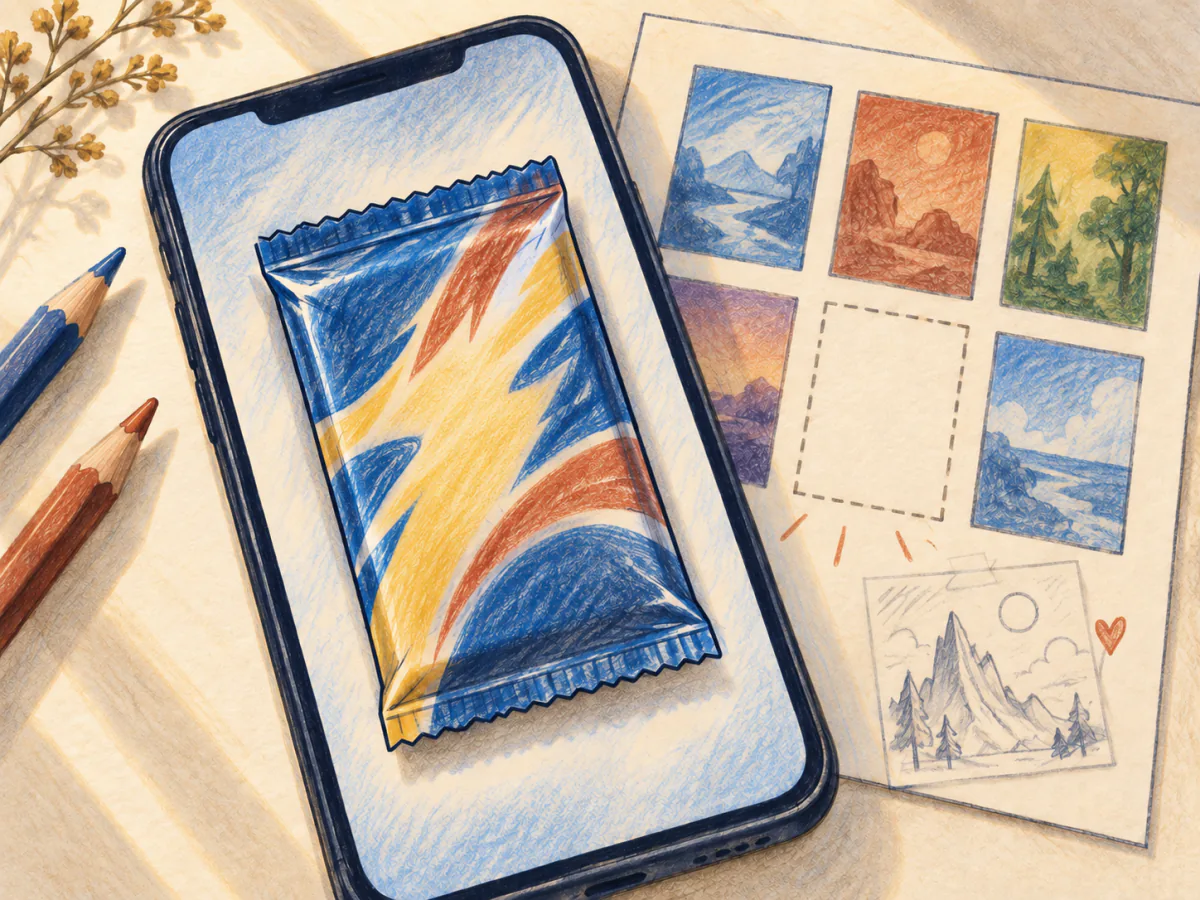
There is a peculiar moment in Pokémon TCG Pocket when the pack is still closed and almost anything seems possible.
Maybe the next card will fill a stubborn gap in your collection. Maybe it will be another copy of a card you already own. Or perhaps it will be the Pokémon or illustration you have been hoping to find.
That uncertainty is part of the appeal. Anticipation, surprise and rarity can all influence the way people respond to rewards. Research into reward learning and randomized digital rewards offers some clues as to why revealing an unknown card can feel different from simply receiving one whose identity is already known.
The excitement starts before the card appears
Pokémon TCG Pocket is built around collecting digital Pokémon cards. The game currently lets players open two booster packs at no cost each day, and its official presentation puts collecting and pack opening at the center of the experience.
But part of the excitement occurs before the player knows what a pack contains.
There is a sequence: selecting a pack, opening it, moving through the cards and discovering the result. Until the reveal, there is a gap between what the player hopes to receive and what will actually appear.
Research into reward learning helps explain why that period of expectation matters. In influential experiments, neuroscientist Wolfram Schultz and colleagues showed that dopamine neurons in primates responded not only to rewards themselves but also to cues predicting rewards and to differences between expected and actual outcomes.
This should not be translated into the familiar shortcut that opening a Pokémon pack simply produces a “dopamine hit.” Those studies were not conducted on Pokémon players, and dopamine is involved in learning and motivation in ways that are considerably more complex than a direct measure of pleasure.
What they do establish is that expectation and unexpected outcomes can play an important role in reward learning.
Why a wanted card can make the reveal feel bigger
For a collector, not every card carries the same value.
Rarity is one factor, but it is not the only one. A player may be searching for a particular Pokémon, an illustration they especially like, a missing card from a set or a card useful for a deck. A technically rarer card is not automatically the card every player wants most.
Research on randomized digital rewards nevertheless suggests that rarity can affect reactions to uncertain outcomes.
In experiments led by Christopher Larche, participants opened simulated loot boxes containing rewards of different rarities. Rarer rewards produced larger skin-conductance responses and were associated with stronger reward reactions and a greater urge to continue opening boxes.
That result needs a clear boundary.
The experiments concerned simulated loot boxes, not Pokémon TCG Pocket. Their reward structures and experimental conditions cannot simply be treated as equivalent to a collectible card game.
The study therefore does not show that Pokémon TCG Pocket players react in the same way.
Instead, it offers evidence that, in one simulated loot-box context, rarity can intensify arousal and motivation around an uncertain reveal. Whether, and to what extent, that pattern applies to Pokémon TCG Pocket would require direct research.
Collecting gives each result a context
The reveal is only one part of the experience.
Once acquired, a card becomes part of a collection. It might complete a missing section of a set, add another version of a favorite Pokémon or become useful in a deck. That gives the uncertain result a purpose beyond the few seconds spent opening the pack.
Pokémon TCG Pocket also has a Pack Point system. Under the game's current rules, opening booster packs from a given expansion earns Pack Points for that expansion, and those points can be exchanged only for eligible cards appearing in the same expansion.
Pokémon Support explicitly states that Pack Points do not expire. The company reiterated this rule in January 2026, including for points earned from booster packs whose availability periods have ended.
This gives players a second form of progression alongside the random reveal. Even when a particular card does not appear immediately, opening packs can contribute toward obtaining a specific eligible card through Pack Points.
The game also includes paid elements. Pokémon's official support documentation describes Poké Gold and a Premium Pass, meaning that the broader experience is not limited to the two packs available at no cost each day.
For families, it can therefore be useful to distinguish three things that may appear close together on a screen but are not identical: collecting a card, using an in-game resource and spending real money.
Similar uncertainty appears in very different forms of entertainment
Unknown outcomes are common across digital entertainment.
They appear in collectible games, gacha systems and loot boxes.
The comparison stops at that shared element of uncertainty.
A collectible card game and a real-money gambling product differ fundamentally in their purpose, financial stakes, regulation and intended audience. The fact that both can involve anticipation before an unknown result does not make them equivalent experiences.
That distinction matters particularly on a site read by Pokémon fans, parents and younger audiences.
Researchers have nevertheless paid close attention to loot boxes because these purchasable randomized rewards can share certain structural features with gambling products.
A systematic review published by Close and colleagues examined research on loot-box purchasing, problem gambling and problem video gaming and concluded that the available evidence showed reproducible associations between loot-box purchasing and both forms of problematic behaviour.
A separate scoping review by Montiel and colleagues also found that studies generally reported positive relationships between loot-box engagement and problematic gaming or gambling, while noting that findings varied according to how engagement was measured and which populations were studied.
These are associations, not proof of causation.
Research by Spicer and colleagues looked specifically at the proposed “gateway” relationship between loot boxes and gambling. Their study used a cross-sectional survey rather than a longitudinal experiment, so it could not establish that one behaviour caused the other.
About one fifth of participants in that study reported what the researchers described as either a gateway or reverse-gateway relationship: some felt loot boxes had influenced their gambling, while others felt gambling had influenced their engagement with loot boxes.
Self-reported relationships of this kind are useful evidence about people's experiences, but they cannot tell us reliably which behaviour came first or whether another factor contributed to both.
That is why claims that randomized game rewards inevitably lead players toward gambling go beyond what this research can establish.
Pokémon adds something that probability cannot explain
If uncertainty were the whole story, every unknown card would be equally interesting.
In practice, it is not.
Imagine two players opening the same pack. One is trying to finish a set and needs a single missing card. The other collects every version of a favorite Pokémon.
The same reveal can have completely different significance to each of them.
Artwork matters too. Pokémon TCG Pocket includes digital cards designed specifically for the app as well as artwork drawn from the wider Pokémon Trading Card Game tradition. A card can therefore be desirable because of the Pokémon it depicts, its illustration, its place in a collection or its usefulness in a deck — not simply because it carries a particular rarity.
That is where collecting changes the meaning of uncertainty.
The player is not waiting for an abstract random reward. They are comparing an unknown card with a collection, a goal and personal preferences that already exist.
Scientific research can help describe parts of the experience: anticipation before a reward, reactions to rarity and the effects of uncertain outcomes.
It cannot reduce Pokémon collecting to a single neurological mechanism, and findings from studies of loot boxes cannot simply be transplanted onto Pokémon TCG Pocket.
The pleasure of opening a pack is better understood as a combination of factors: uncertainty about what comes next, the possibility of finding something unusual, progress toward a collection and the attachment a player may already have to a particular Pokémon or illustration.
That is why the few seconds before the reveal can matter so much: the pack is still closed, but the collector already knows what they hope to find.