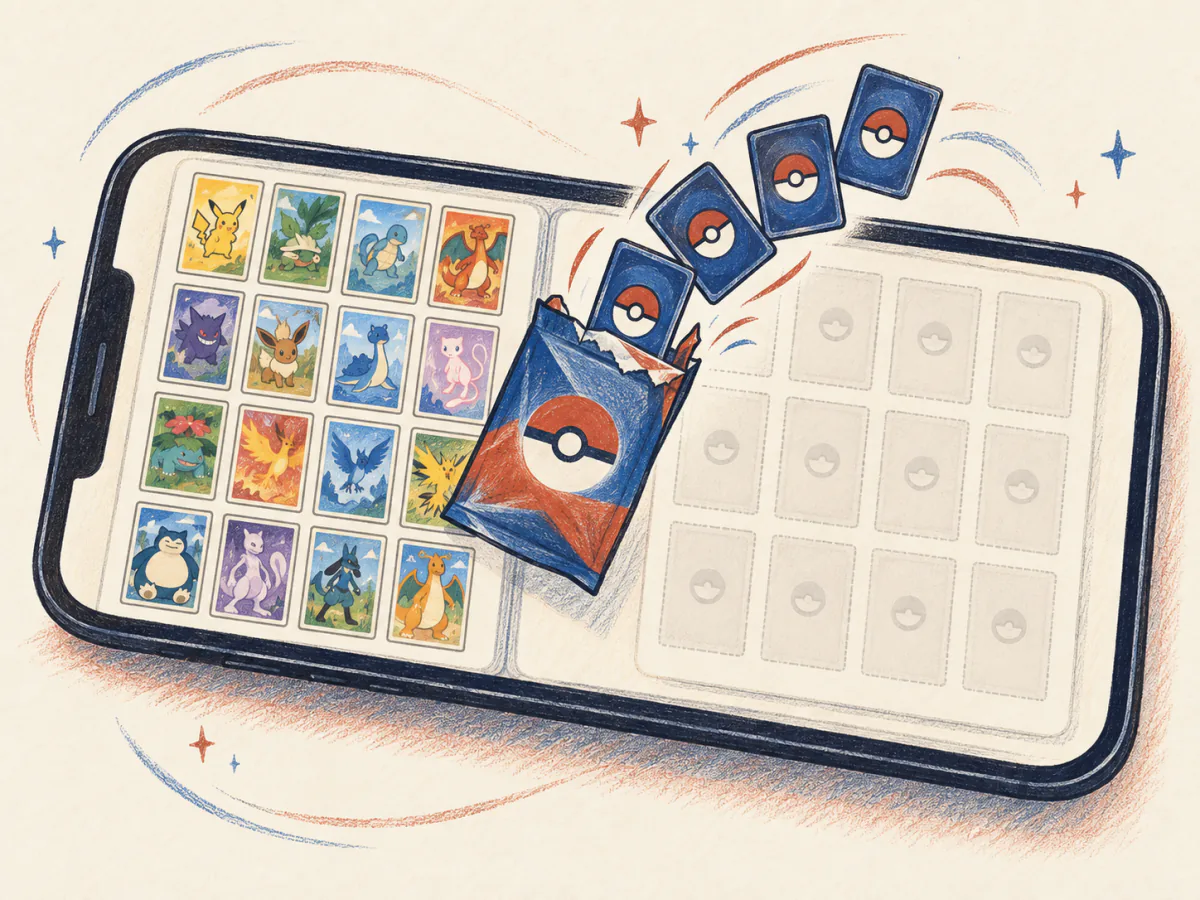
At first glance, they’re just simple cardboard cards featuring colorful creatures. Yet between 2020 and 2025, Pokémon cards transformed supermarket aisles into battlefields and retail stores into arenas of speculation. What was once just a nostalgic pastime for some has become a hyperactive global market, where lines form at dawn, stock sells out in minutes, and prices reach heights comparable to those of contemporary art or cryptocurrencies.
In this context, it’s hard to distinguish true enthusiasts from opportunists, or child collectors from adult speculators.
2020–2025: Five Years of Global Frenzy
The First Lockdown as the Spark
It all began in the spring of 2020. As the entire world lived under lockdown, Twitch became a digital refuge and a platform for self-expression.
Influencers such as Logan Paul in the U.S. and Michou in France streamed live unboxing videos of Pokémon booster packs. The phenomenon exploded: views numbered in the millions, comments poured in, and prices skyrocketed.
On eBay, searches related to Pokémon cards increased fivefold. Buying booster packs is both a nostalgic gesture and a speculative gamble, rooted in the collective emotion of a frozen moment in time.
Sustained Hype, a Market Running Wild
The year 2021 marks a decisive turning point: Pokémon is celebrating its 25th anniversary with commemorative products, virtual concerts, and a wave of expansions that are reigniting the flame among longtime fans.
But it is above all in the secondary market that the boom is most evident. Record-breaking sales —such as that of a 1st Edition Shadowless Charizard for over $420,000—are catching the attention of investors. The TCG is becoming an asset.
The arrival of automated buying bots and specialized Discord servers has completed the transformation of a niche passion into an extremely tight market.
Yet, even with an announced production of 9.7 billion cards for the 2023–2024 season, The Pokémon Company is unable to curb the shortage: store shelves remain desperately empty, and new expansions trigger unprecedented rushes.
Profile of the Modern Scalper
Industrial-Scale Methods for Immediate Profit
The scalper of 2025 is no longer just an isolated opportunist. He is organized, equipped, and coordinated.
When stores open or online sales begin, he acts with split-second precision. Using scraping bots, they monitor product listings on the websites of major retailers like Carrefour, JouéClub, and Micromania.
On Discord, they communicate in real time with other scalpers, pool inventory, share restock alerts, and optimize purchasing strategies.
These communities function as group-buying networks, capable of clearing a site’s inventory in a matter of seconds.
Pokémon cards have become a volatile commodity to snap up before anyone else —an arbitrage strategy akin to algorithmic trading.
A parallel market embraced with cynicism and profitability
The goal is simple: buy to resell immediately, with margins often ranging from 100 to 300%. For example, an Elite box set purchased for €60 can be resold for €150 within the same day on Vinted, LeBonCoin, or Cardmarket.
Scalping, which has become profitable in the short term, is even exploited by some shops: “scalper bundles” are offered at inflated prices, combining artificial scarcity with a mocking nod to speculative practices.
This openly tongue-in-cheek approach barely masks a harsher reality: organized scarcity is becoming a marketing tool.
In this climate, regular collectors struggle to access products without resorting to the resale market, and young audiences—who are, after all, the natural target demographic for the TCG—are increasingly excluded from the official distribution channels.
A symbolic example of this speculative trend is Gary Haase, alias King Pokemon, a collector whose passion quickly took a commercial turn.
A public altercation in particular stirred up the community when Gary reportedly stated that he would rather erase artist Mitsuhiro Arita’s signature from a card than “ruin” its financial value —a gesture perceived as dismissive toward the artist.
On Reddit, a user summarizes the controversy between King Pokémon and YouTuber Frosted Caribou:
“Gary ‘King Pokémon’ Haase is a longtime Pokémon collector and investor… He’s using his significant influence in the hobby to manipulate the market for his own gain. ”
This passage illustrates just how actively—and controversially—some collector-influencers are contributing to the rise of speculation.
A Minefield: Tensions and Outbursts in Stores
Empty shelves, frazzled customers
With each new release, surreal scenes are becoming more common. On February 7, 2025, at Auchan Bagnolet, more than 300 people were waiting in the rain as early as 5 a.m. to try to get a Prismatic Evolutions box set. The retailer imposed a strict limit: one set per person. The result: the sets sold out in 25 minutes, and palpable tension in the line.
In January, right as the Blooming Waters Premium Collection was being released, a brawl broke out among several adults at a Costco store in Los Angeles; the incident was filmed and widely shared on TikTok. This phenomenon is nothing new: as early as 2021, Target suspended in-store sales of Pokémon cards in the United States following an armed altercation.
These incidents highlight the extreme tension surrounding TCG products, which have become objects of desire —and even conflict.
A Shortage Fueled by the Fear of Missing Out
Behind these extreme scenes lies a phenomenon well known to economists: perceived scarcity.
Every Pokémon expansion has become a source of anxiety, where it’s first come, first served.
This fear of missing out (FOMO)—fueled by scalpers and amplified by social media—drives consumers to plan ahead, camp out in front of stores, or rush to pre-order, with pre-orders often selling out in minutes.
Some families report having to visit four or five stores in a single morning just to find a single booster pack.
In this climate of constant tension, stores are adapting their logistical operations, sometimes even stepping up security or temporarily hiding their inventory before opening.
A black market on par with gold or Lego?
When a card rivals a luxury watch
The skyrocketing prices of certain Pokémon cards have propelled them into the realm of sought-after alternative assets, alongside collectible sneakers, rare Lego sets, or even Swiss watches.
In 2021, the sale of a Pikachu Illustrator PSA 10 for $5,275,000—purchased and worn by Logan Paul during a boxing match—was widely seen as a cultural and financial turning point.
First-edition Shadowless Charizard cards regularly fetch between $300,000 and $400,000, while more recent cards—even when impeccably graded—exceed 10,000 euros upon release if they combine rarity and desirability.
Investors— sometimes from outside the Pokémon universe —see it as a diversified, liquid, and appreciating asset, subject to the same speculative dynamics as a work of contemporary art.
Grading: The Card as a Financial Product
The key to this transformation lies in three letters: PSA. Grading —the process of evaluating a card’s condition by a specialized organization (PSA in the United States, PCA in France)—has ushered the TCG into a new era.
A card graded “10 Gem Mint” can be worth ten times as much as its ungraded version. This certification reassures buyers, standardizes value, and fuels a market where aesthetics, rarity, and condition become the pillars of speculation. For some collectors, sending cards for grading has become an investment in its own right, following a logic similar to that of the financial markets: arbitrage, valuation, and selling at the right time. At the same time, sites like Cardmarket and eBay function as exchanges where price fluctuations are tracked on a daily basis.
Why Is Production Still Insufficient?
A broader, more volatile, and more insatiable demand
On the surface, everything has been done to stem the shortage.
With 9.7 billion cards printed for the 2023–2024 season, The Pokémon Company has broken all production records. Yet, shelves are still being cleared just as quickly.
Why? Because demand, too, has changed in nature. It’s no longer limited to children collecting for fun. Since 2024, with the launch of the mobile game Pokémon TCG Pocket, a new generation has been introduced to the TCG. At the same time, people in their thirties and forties, nostalgic for their first cards, are returning in force with greater purchasing power and a heightened appetite for tangible items with high emotional and speculative value. The result is a broader, more demanding audience, often willing to pay more—or even stockpile cards for resale.
A Model Designed to Maintain Suspense
Rarity is no accident: it has been built into the TCG’s business model since its inception. The Pokémon Company releases approximately four major expansions per year, each printed in limited quantities, often in a single production run. This deliberately constrained system fosters a sense of urgency among consumers and reinforces the perceived value of the products. Added to this are special editions, collector’s boxes, and promo cards that are only available in bundles or at one-time events, making them even harder to acquire. Thus, a structural tension exists regarding inventory, where supply is never designed to meet all demand, but rather to constantly stimulate the desire to buy.
Grading Transforms the Card into an Investment Product
A booster pack is no longer just a pleasure to open: it’s seen as a lottery ticket. By finding a card that’s potentially “gradeable”—that is, in perfect condition to earn a high PSA or PCA grade —the buyer enters into an investment mindset.
This aspect has profoundly changed the relationship with cards: now, their value is tied to their potential for certification and resale. A rare card graded PSA 10 can increase in value tenfold, or even a hundredfold. In fact, even though cards are printed in large quantities, only those in “gem mint” condition spark a frenzied hunt. Grading has thus established an economic hierarchy that replicates rarity, even in the face of abundance.
Counteroffensive: Quotas, Restrictions, Devaluation
Retailers on the Front Lines of the Tensions
Faced with pressure from customers and the inability to guarantee “normal” sales, major retailers had to respond.
In France, starting in February 2025, hypermarkets such as Carrefour, Auchan, and Leclerc implemented strict quotas: only one booster pack or box per person.
Some stores went so far as to organize sales with numbered wristbands or staggered entry times to prevent crowds.
In the United States, Target had already adopted a radical measure as early as 2021: a total suspension of in-store sales of Pokémon cards following an armed altercation, with sales resuming exclusively online. These decisions are aimed less at satisfying everyone than at preventing unrest —an implicit admission that the tension surrounding the product goes beyond mere commercial considerations.
What’s next? A return to normal or a resurgence of the frenzy?
Overproduction or a new all-time high?
The market saturation strategy could pay off in the short term. Three expansions are already scheduled through the end of 2025 (Scarlet & Violet 10, EV10.5 Black & White, EV11), with print runs described as “exceptional.” The goal is to defuse the scarcity mindset by making stock more accessible for longer.
However, some analysts fear the opposite effect. The announcement of commemorative reissues for the franchise’s 30th anniversary in 2026—notably a Charizard Base Set and a reimagined Pikachu Illustrator—is already fueling speculation and pre-orders. As is often the case in the world of TCGs, every attempt at balance can become a new source of tension.
Will the bubble burst… or evolve?
The arrival of Pokémon TCG Pocket, available on mobile, could play a moderating role. By making it easier to trade, collect, and discover cards online, this digital version eases the pressure on physical stock.
For some young players, it’s even an alternative, less expensive, and more seamless gateway. But the opposite effect cannot be ruled out: by further expanding the fan base, the mobile game could fuel demand for the rarest physical cards.
At the same time, several voices—particularly in Germany and Japan—are calling for stricter regulation: spending caps, bans on bots, and even regulations on resales. If in-store violence continues, Europe could in turn follow the Japanese model based on strict quotas, thereby limiting the “Pokémon craze” to more reasonable proportions.
The Pokémon Trading Card Game is going through a pivotal period, where the line between genuine passion and rampant speculation is becoming thinner by the day. What began as a childhood hobby has turned into a battleground for economic interests, complete with its own rules, networks, profit margins… and victims. As long as rarity continues to be engineered, as long as the concept of “sealed” is worth its weight in gold, and as long as resale platforms fail to better regulate these practices, tensions will remain high.
The future will depend as much on The Pokémon Company’s strategic choices as on collectors’ ability to restore meaning to their passion. If fall 2025 delivers on its promise of a massive influx of inventory, a return to balance is possible. But on the eve of a highly anticipated 30th anniversary, and in the face of an ever-growing community, one thing is certain: the story of the Pokémon TCG is far from over.